Years 3–4
Junior Speakers
An introduction to public speaking for our youngest speakers.
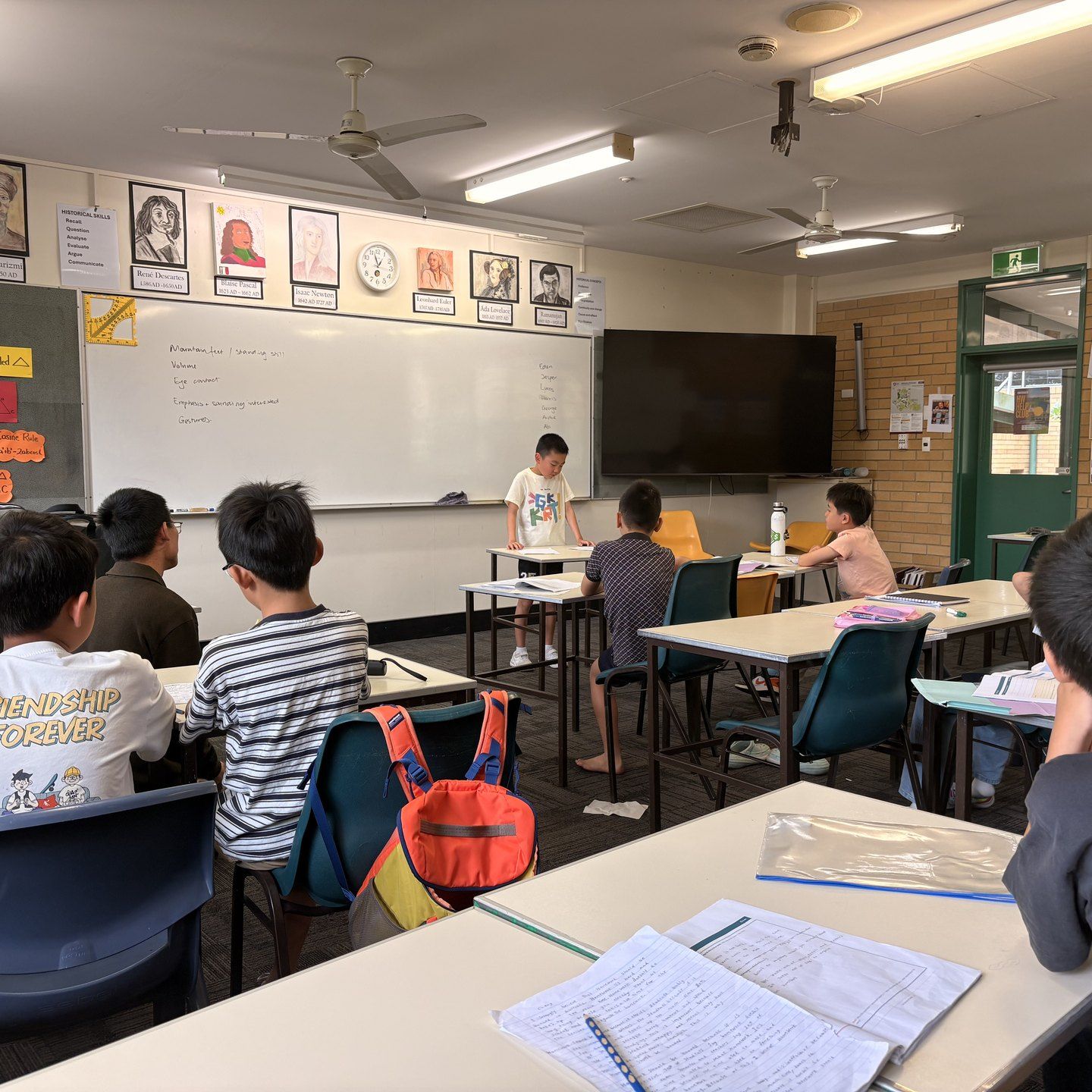
About this class
Junior Speakers is aimed at young beginners and is the entry point into our debating program. It’s a year-long curriculum designed for Year 3 and 4 students, with a focus on developing persuasive writing and presentation skills aligned with the Australian Curriculum.
We spend each term developing a key persuasive skill:
- Term 1: Structure. Students learn to present confidently to their peers, so that speaking to a room feels exciting, not nerve-wracking.
- Term 2: Manner. Students learn to engage an audience through excellent manner: eye contact, deliberate use of voice, body language.
- Term 3: Planning. Students apply a variety of planning strategies to help them present increasingly sophisticated persuasive texts.
- Term 4: Transition into Debating. Students will learn about key debating structures and discover the links between their persuasive skills and the world of debating!
Throughout the year, our lessons uniquely emphasise peer feedback; especially during practice presentations. We’ve found that it’s an incredibly effective way for students to both take suggestions on board, and apply their newly-learnt skills. What they don’t hear from a teacher, they’ll hear from their peers.
The skills learnt in Junior Speakers are the foundational skills for debating. A speaker who is confident, who can structure an argument, and listen critically, is a speaker set up perfectly for debating!
What they'll learn
- 1. Presenting CONFIDENTLY
- 2. Writing an individual PERSUASIVE speech
- 3. ENGAGING the audience
- 4. Giving constructive FEEDBACK to peers
Our term plan
This is a year-long program over four focus areas delivered over four terms. Sessions alternate between CONTENT weeks, where students learn a new skill, and PRACTICE weeks, where students write and deliver speeches. Students that complete this program will be ready to move straight into our debating programs.
Speakers ready to take it further can go on to competition preparation for QDU and GPS debating.
Questions about this program
What happens in a Junior Speakers class?
Classes switch between two kinds of week. In CONTENT weeks, students learn a new skill. In PRACTICE weeks, they write and deliver their own speeches.
Across the year we work through four focus areas, one each term: presenting confidently, writing a persuasive speech, engaging the audience, and giving feedback to their classmates.
Will my child debate in Junior Speakers?
Not yet - Junior Speakers is all about public speaking. Students write and deliver their own persuasive speeches, and they help each other improve with lots of peer feedback.
These are the skills debating is built on. Students who finish Junior Speakers are ready to move into our debating programs!
My child is in Year 4. Should they start in Junior Speakers or Primary Debating 1?
It depends on where your child is up to. Junior Speakers covers the basics of public speaking, and Primary Debating 1 is where students start formal debating in teams.
When you get in touch, we’ll ask about any speaking your child has already done. After the free trial class, the coach will also tell you which program they’d recommend.
What year levels do you cater for?
We cater for students from Year 3 to 12. Students are grouped by a combination of debating experience and age, and we work closely with our students and parents to ensure every child enjoys every bit of their class.
- Junior Speakers: Years 3–4
- Primary Debating 1: Years 4–5
- Primary Debating 2: Years 5–6
- Junior Secondary: Years 7–9
- Senior Competition Squad: Years 9–12
See our programs for what each program covers.